
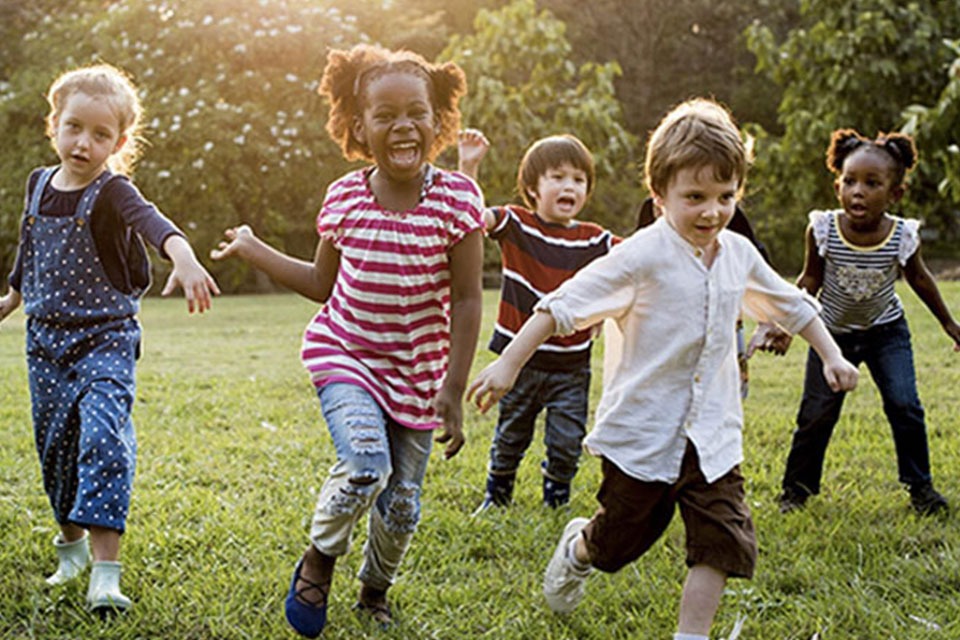
The future of any community is in the hands of its children.
Children thrive when the ground beneath them is stable. Yet for many families, the essentials — food, shelter, safety have become increasingly fragile.
Abraham Maslow reminded us that human potential begins with meeting basic needs, but recent disruptions to SNAP (Supplemental Nutrition Assistance Program) and rising living costs mean that too many young people are arriving at school hungry, tired or distracted.
If we expect children to lead, learn and grow, we must first ensure they can rely on the fundamentals that enable them to rise.
about:blank
Viewed through the lens Maslow offered more than a half-century ago, I’m struck that human possibility rests first on secure access to food, shelter and health— it becomes clear how many children and families today are trying to grow on unsteady ground.
Across the country, the basics feel less certain: a stable home, consistent meals, safe learning environments, and the confidence that tomorrow will be better than today.
For low-income households, single parents, college students and elders living on fixed incomes, this instability is not new.
But recent SNAP disruptions during the 43-day federal shutdown intensified that uncertainty.
For households already stretching every dollar across rent, medication and groceries, this is not bureaucracy; it is a nightly question of whether there will be enough food on the table.
Maslow’s hierarchy helps clarify why these disruptions matter. His model begins with physiological needs such as food, water and shelter, followed by safety, belonging, esteem and, ultimately, the freedom to pursue one’s potential.
When the lower layers of that pyramid are unstable, the higher ones become harder to reach.
The possibility of new requirements that could force millions of dependents to reapply for SNAP and other basic-needs supports under unclear rules is more than a policy concern; it undermines the foundation families need to thrive.
Physiological Needs
At the base of Maslow’s pyramid is nourishment. When breakfast, lunch or dinner is uncertain, everything else narrows.
SNAP delays, rising food prices and shifting policy expectations all create instability around the most basic requirement of daily life.
In Santa Barbara County, where the cost of living is among the highest in California, even a minor delay or reduction in benefits carries tangible consequences.
And because children cannot learn, focus or build confidence on an empty stomach, instability at this level shapes the entire school day.
Safety
The next layer in Maslow’s hierarchy is safety, predictability, routine and protection from harm.
For families balancing high housing costs, health care challenges and multiple jobs, uncertainty in SNAP or related benefits erodes that sense of stability.
When a parent cannot predict whether benefits will load on time or whether new rules will interrupt support, that stress reverberates throughout the household. Stability, not scarcity, is what allows families to imagine futures beyond the next week.
Belonging and Esteem
Above safety comes belonging and esteem. These are built in families, schools and youth organizations, places where children feel seen, supported and capable.
But belonging is also shaped by how society talks about need. When assistance programs are framed solely through suspicion or austerity, they reinforce stigma that young people internalize.
In a county as economically diverse as Santa Barbara, ensuring that youth understand their circumstances do not define their worth is a responsibility shared across institutions.
Why This Matters
For young people, hunger is never a standalone experience. It affects attention, behavior, emotional regulation and their developing sense of self.
A child who arrives at a learning environment after skipping breakfast is not just hungry; they are at an immediate disadvantage in forming friendships, engaging in activities and believing in their own capability.
Maslow reminds us that belonging and learning rest on physiological and emotional security. When children’s basic needs go unmet, the climb toward self-esteem, leadership and resilience becomes steeper.
Stable access to food and safety is not charity; it is the developmental foundation on which thriving kids and strong communities are built.
What We Can Do
Kindness becomes real when we translate awareness into action:
Ask: Urge leaders at the local, state and federal levels to protect programs like SNAP and CalFresh. Strong family stability strengthens the entire youth development ecosystem.
Give: Support organizations that feed, educate and stabilize families. Monthly donations to the Foodbank of Santa Barbara County and local partners provide essential, year-round resources.
Open: Offer direct support: volunteer at a food distribution, start a meal train or assist with a school pantry. These small gestures have large ripple effects.
Share: Circulate information such as Foodbank maps, CalFresh links and community resources, so families know where to turn before they reach crisis.
Organize: Work with schools, colleges, clinics and nonprofit organizations to host enrollment clinics and basic-needs fairs that reach families where they already are.
Leadership Commitment
If kindness means anything in public life, it must begin with ensuring that children and families can stand on solid ground.
Maslow showed us that people cannot climb toward possibility without a stable foundation. Organizational mission, programs and policies are most powerful when they wrap belonging, leadership and opportunity around families whose basic needs are secure.
I know firsthand what it means to persevere through scarcity, to raise children while completing my education, and to rely on programs like SNAP as a bridge to a better life.
I also know what becomes possible when a community wraps stability and support around its young people. Our charge is not simply to feed children, but to clear the path beneath their feet so they can rise.
Kindness begins with meeting basic needs. Leadership begins with ensuring that every child in Santa Barbara County has the chance to climb Maslow’s pyramid, not alone, but supported by a community that believes in their future.